
Opt-outs involve both Twilio’s messaging block and TextBay’s skipped numbers list. Keep both in mind when someone asks to stop or later asks to subscribe again.
What happens after STOP #
When someone replies STOP (or UNSUBSCRIBE, CANCEL and similar) to a US or Canadian number, Twilio and TextBay handle the request at different stages:
- Twilio blocks them on its side. Any later send to that person fails with error 21610 until they text START.
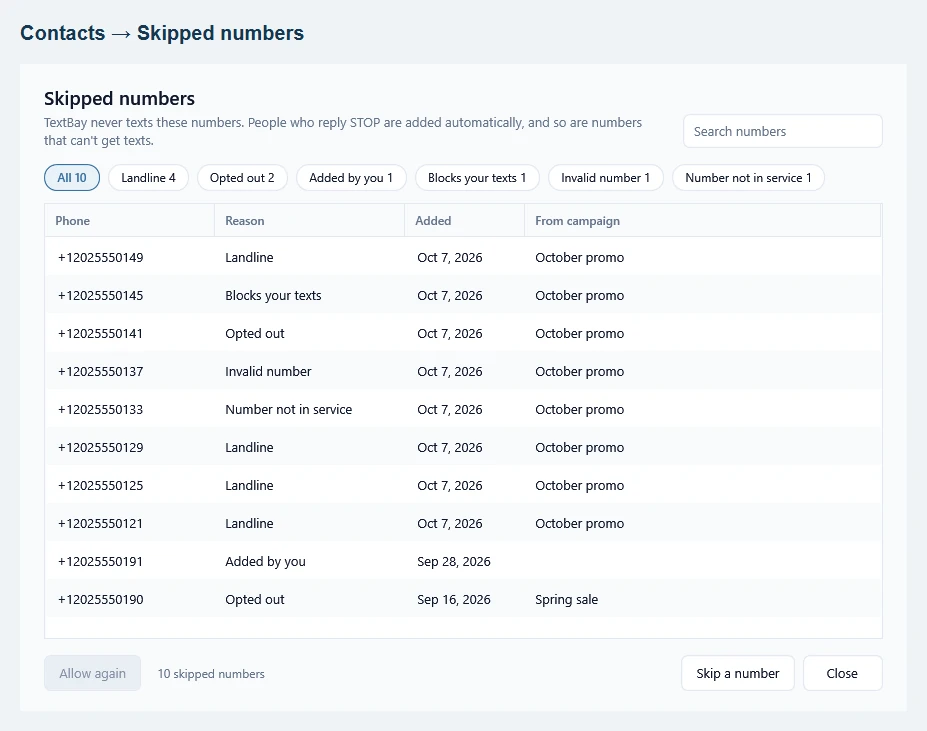
- TextBay skips them on yours. When the inbox fetches the STOP reply, it adds the number to your skipped numbers list, so future sends leave those people out instead of paying for 21610 failures. The same happens when a send hits 21610 directly. Inbox replies respect the list too: TextBay won’t reply to someone who opted out.
The list lives on the Contacts page under Skipped numbers. It also holds numbers that can’t get texts, such as landlines (see Handle failed numbers). Skip a number adds a number by hand, and Allow again removes the selected numbers from the list.
If someone wants to subscribe again #
Confirm their renewed consent first. Where Twilio requires a reply keyword, the person must send START or the configured opt-in keyword to your sender. Then select their number under Skipped numbers and click Allow again; TextBay asks you to confirm for people who replied STOP. Allow again does not remove a Twilio-side block, and a START reply does not take the number off TextBay’s list by itself.
The wording: your opt-out line #
Do not assume your message already includes opt-out wording; check the message and your Twilio configuration. Twilio’s messaging policy requires opt-out instructions in the initial message; review the current policy for your use case. The composer’s Add an opt-out line button appends “Reply STOP to opt out.” once; check the consent and opt-out requirements for your destination and use case.
Two channels play by different rules. On WhatsApp, TextBay hides this SMS/MMS wording button, but still detects supported opt-out keywords when its inbox fetches messages. Twilio can also handle keywords for WhatsApp senders through a Messaging Service’s Advanced Opt-Out configuration. Honour requests to stop on every channel. Sender names cannot receive replies at all, so STOP is impossible: include a different opt-out route and honour it by hand. See Sender names.